
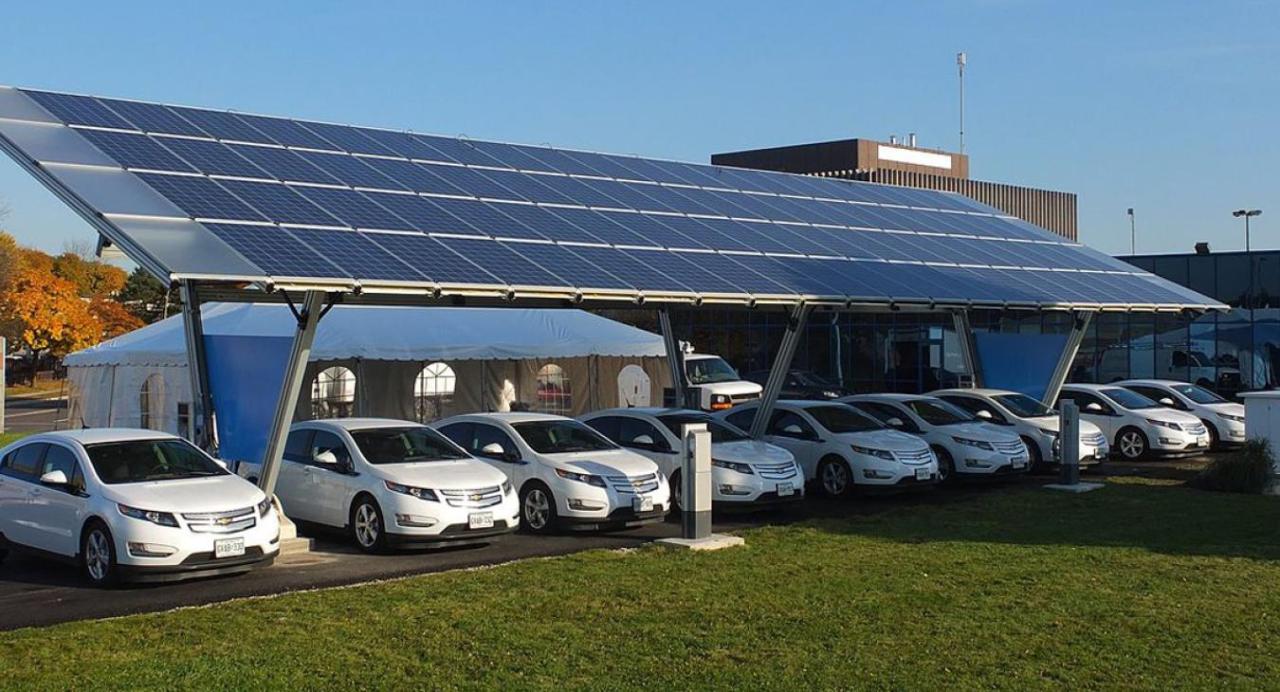
The transition to electric vehicles (EVs) is accelerating globally, marking a significant step away from fossil fuel dependency. However, a common question arises among environmentally conscious drivers: “If my car is plugged into a grid potentially powered by coal or natural gas, is it truly clean?” This is where the powerful synergy between solar panels and electric vehicles comes into play. Imagine a future where your daily commute, your road trips, and your errands are all powered by the clean, abundant, and free energy of the sun. This is not a distant dream; it is a practical and increasingly accessible reality for homeowners today. This definitive guide will delve deep into the mechanics, economics, and practicalities of using solar panels to power your car, transforming your home into a personal, zero-emission fueling station.
A. The Foundational Synergy: How Solar Panels and Electric Vehicles Create a Perfect Partnership
At its core, the concept is elegantly simple: a solar photovoltaic (PV) system installed on your roof captures sunlight and converts it into direct current (DC) electricity. An inverter then transforms this DC electricity into the alternating current (AC) used by your home’s appliances and, crucially, your EV charger. This self-generated electricity can be used to charge your vehicle’s battery, effectively turning sunlight into miles driven.
This partnership offers a closed-loop, sustainable ecosystem with profound benefits:
-
True Zero-Emission Transportation: By charging your EV with solar power, you eliminate the well-to-wheel emissions entirely. Your vehicle runs on 100% renewable energy, maximizing your environmental impact.
-
Substantial Financial Savings: Electricity costs money, and charging an EV can significantly increase your monthly utility bill. Solar power, once the system is paid for, is essentially free. You are insulating yourself from volatile electricity rates and locking in your “fuel” cost for the 25+ year lifespan of your solar panels.
-
Enhanced Energy Independence: Generating your own power reduces your reliance on the traditional electrical grid. This not only provides a sense of autonomy but also acts as a buffer against power outages (especially when paired with a battery storage system) and fluctuating energy prices.
-
Increased Home Value: Studies have consistently shown that homes equipped with solar panel systems and EV charging infrastructure sell for a premium compared to non-solar homes, making it a sound long-term investment.
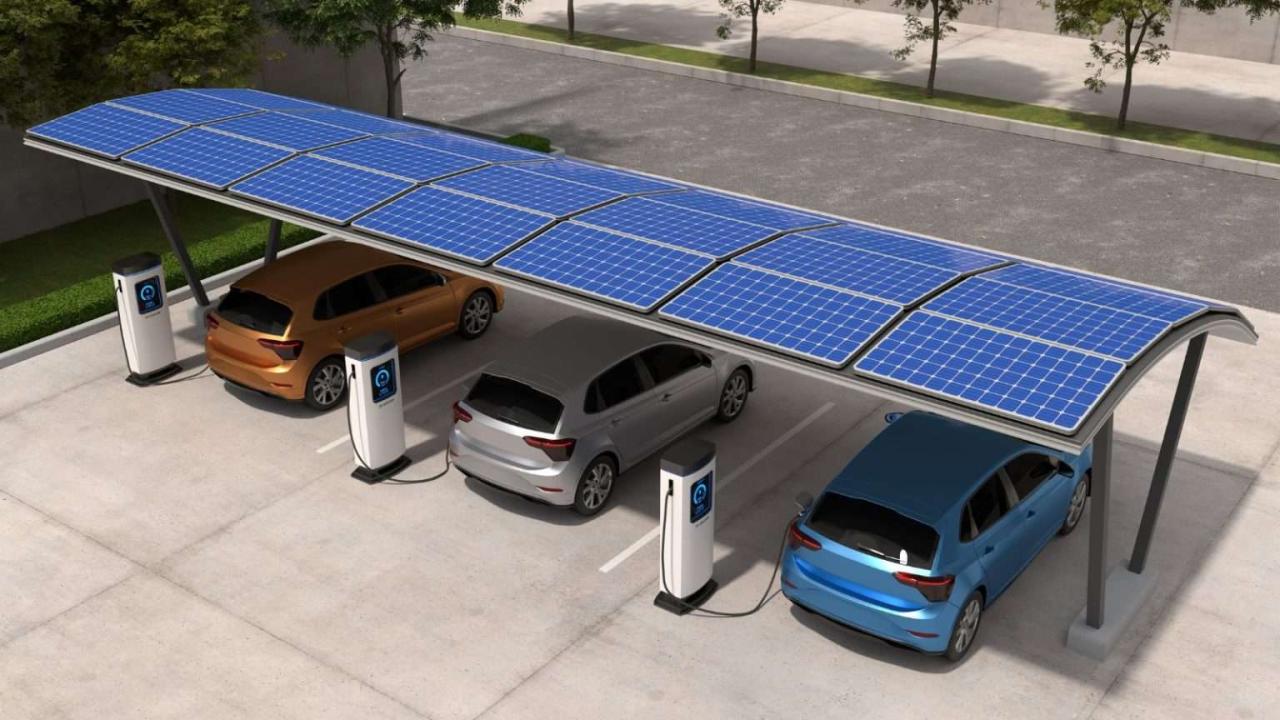
B. Quantifying Your Solar Needs: A Detailed Calculation for Your EV
One of the most critical steps is accurately sizing your solar panel system to accommodate your EV’s energy consumption. An undersized system will leave you still dependent on the grid, while an oversized system may not offer the best financial return. Here is a detailed, step-by-step process to estimate your needs.
A. Analyze Your Vehicle’s Electricity Consumption:
Every EV has an efficiency rating, typically measured in kilowatt-hours per 100 miles (kWh/100 mi) or miles per gallon equivalent (MPGe). Let’s assume your EV consumes 30 kWh per 100 miles. This is a common average for modern electric vehicles.
B. Determine Your Monthly Driving Distance:
Consult your records or your car’s odometer. The average American drives about 1,000 miles per month. For this example, we will use that figure.
C. Calculate the Monthly Energy Requirement for Your EV:
(Monthly Miles Driven / 100) * kWh/100 mi = Monthly kWh Needed
(1,000 miles / 100) * 30 kWh = 300 kWh per month
This means you need an additional 300 kWh per month from your solar system just to power your car.
D. Factor in System Efficiency and Sunlight Exposure:
Solar panel output is not constant. It depends on your geographical location (solar insolation), the angle and orientation of your roof, shading, and system losses (e.g., inverter efficiency, dirt on panels). A general rule of thumb is to derate the system by about 20-25%. To find the total system size needed, we must first find the daily requirement and then adjust for sunlight hours.
-
Daily kWh Needed for EV: 300 kWh / 30 days = 10 kWh per day.
-
Account for Peak Sunlight Hours: The term “peak sun hours” refers to the number of hours per day when sunlight intensity averages 1,000 watts per square meter. This varies greatly. Let’s assume you live in a region with a decent average of 4.5 peak sun hours per day.
-
Calculate the System Size:
Daily kWh Needed / Peak Sun Hours = Solar System Size (in kW)
10 kWh / 4.5 hours = 2.22 kW
This 2.22 kW is the additional capacity needed solely for your EV. However, you must also power your home.
E. Calculate Your Total Home Energy Consumption:
Check your past electricity bills to find your home’s average monthly usage (excluding the EV). A typical home might use around 900 kWh per month.
-
Total Home + EV Monthly Usage: 900 kWh (home) + 300 kWh (EV) = 1,200 kWh per month.
-
Total Daily Energy Need: 1,200 kWh / 30 days = 40 kWh per day.
-
Total Solar System Size Needed: 40 kWh / 4.5 peak sun hours = 8.89 kW.
Therefore, for this scenario, a 9 kW solar system would be a suitable size to cover both your home and your electric vehicle, allowing you to achieve near-total energy independence.
C. The Critical Components of a Solar-Powered EV Ecosystem
A successful solar-powered EV charging setup involves more than just panels on the roof. It is an integrated system with several key components.
A. Solar Panels (Photovoltaic Modules):
These are the workhorses of the system. You will encounter mainly three types:
-
Monocrystalline: The most efficient and space-efficient, recognizable by their dark black color and uniform appearance. They perform better in low-light conditions and have a longer lifespan, but are the most expensive.
-
Polycrystalline: Slightly less efficient and more affordable, with a blue, speckled look. They are a good budget-friendly option if you have ample roof space.
-
Thin-Film: The least efficient and least expensive, requiring significant space. They are flexible and lightweight but are less common for residential rooftop installations.
B. Inverter:
The inverter is the brain of the operation. Solar panels produce DC power, but your home and EV charger use AC power. The inverter’s job is to make this conversion. There are two primary types:
-
String Inverters: A single, centralized inverter handles the output of a whole “string” of panels. This is a cost-effective solution, but if one panel is shaded, it can reduce the performance of the entire string.
-
Microinverters: A small inverter is attached to each individual solar panel. This allows each panel to operate independently, maximizing output even if some panels are shaded or dirty. They are more expensive but offer superior performance and detailed monitoring.
C. EV Charging Station (EVSE – Electric Vehicle Supply Equipment):
While you can plug your EV into a standard 120V wall outlet (Level 1 charging), it is impractically slow for replenishing the energy used by daily driving. For solar charging, a dedicated Level 2 charger is highly recommended.
-
Level 2 Charger: These chargers operate on 240V (similar to an electric dryer or oven) and can charge an EV 5 to 10 times faster than a standard outlet. This allows you to efficiently use the solar power generated during the day in a short amount of time.
D. Energy Storage System (Battery – Optional but Highly Recommended):
This is the component that truly unlocks the full potential of solar-powered driving. Without a battery, any solar energy you generate during the day that you don’t immediately use is sent back to the grid (through net metering). But what happens when you want to charge your car at night? A home battery, like the Tesla Powerwall or LG Chem RESU, stores your excess solar energy for use at any time.
-
Daytime: Solar panels power your home and charge your battery.
-
Evening/Night: Your home and EV charger draw power from the battery, not the grid. This enables true 24/7 solar charging.
E. Energy Management System (EMS):
Advanced systems can include smart technology that optimizes energy flow. An EMS can automatically prioritize sending solar power to your EV charger, then to your home battery, and finally exporting the excess to the grid, ensuring you maximize self-consumption.
D. The Financial Blueprint: Incentives, Costs, and Return on Investment
The upfront cost of a solar-plus-storage system is significant, but a myriad of financial incentives and long-term savings make it a compelling investment.
A. Breakdown of Costs:
-
Solar Panels: The average cost for a residential system in the U.S. is between $2.50 and $3.50 per watt before incentives. For our 9 kW system, that’s a gross cost of $22,500 – $31,500.
-
Battery Storage: A single Tesla Powerwall (13.5 kWh capacity) can cost between $10,000 and $14,000 installed, including supporting hardware.
-
Level 2 EV Charger: A quality charger and professional installation typically range from $800 to $2,000.
B. Major Financial Incentives:
-
Federal Investment Tax Credit (ITC): This is the most significant incentive. In the U.S., you can deduct 30% of the total system cost from your federal income taxes. This applies to both the solar panels and the battery storage if installed simultaneously. On a $35,000 system, this is a $10,500 saving.
-
State and Local Incentives: Many states, municipalities, and even utilities offer additional rebates, tax credits, or performance-based incentives (PBIs). Websites like the Database of State Incentives for Renewables & Efficiency (DSIRE) are invaluable resources.
-
Net Metering (NEM): If you do not have a battery, net metering allows you to export surplus solar energy to the grid in exchange for credits on your electricity bill. These credits can then be used to draw power from the grid at night or on cloudy days. It effectively uses the grid as a “virtual battery.”
C. Calculating Your Payback Period and ROI:
Let’s create a simplified model:
-
Total System Cost (after ITC): Let’s assume a total cost of $40,000 for a 9kW system with one battery. After the 30% ITC, your net cost is $28,000.
-
Annual Savings: Your combined savings from eliminating your home electricity bill ($1,800/year for 900kWh/month at $0.17/kWh) and your gasoline bill (assuming $1,800/year saved by switching to electricity).
-
Total Annual Savings: $3,600
-
-
Simple Payback Period: Net Cost / Annual Savings = $28,000 / $3,600 = ~7.8 years.
Given that solar panels have a 25-year warranty, you would enjoy over 17 years of virtually free electricity and driving, making it an exceptionally sound financial decision.
E. Direct vs. Indirect Solar Charging: Understanding the Practicalities
A frequent point of confusion is the concept of charging a car “directly” from the sun.
-
Indirect Charging (The Standard and Recommended Method): This is the model described throughout this article. Your solar panels are connected to your home’s main electrical panel. The energy they produce powers your entire home. Any excess is stored in a battery or sent to the grid. Your EV charger, plugged into your home’s circuit, draws from this pool of energy. It is simple, efficient, and leverages existing infrastructure and financial incentives like net metering.
-
Direct DC Charging (A Niche Concept): Theoretically, you could connect solar panels directly to your EV, bypassing the inverter and home’s electrical system. However, this is highly impractical for several reasons:
-
Inconsistent Power: Solar panel output fluctuates wildly with cloud cover and time of day. EVs require stable, high-power input to charge their complex battery management systems.
-
Lack of Infrastructure: There are no consumer-grade, code-compliant products that facilitate this easily.
-
Inefficiency: You would need a massive, dedicated ground-mounted solar array and a specialized DC-DC converter to make it work, and you could only charge during peak sunlight hours.
-
Therefore, for all practical purposes, the “indirect” method through your home’s electrical system is the only viable and efficient way to power your car with solar energy today.
F. The Reality of On-Vehicle Solar Panels
The vision of a car covered in solar panels that never needs to be plugged in is captivating. While some prototypes and limited-production vehicles (like the Lightyear 0 or Aptera) have achieved this, the technology is not yet practical for mainstream EVs.
The surface area on a car’s roof is limited. Even with high-efficiency panels, this area can only generate about 1 to 2 kWh of energy on a very sunny day. For an EV with a 75 kWh battery, this would only add about 4-8 miles of range per day. This is useful for offsetting phantom drain or powering auxiliary systems, but it is nowhere near sufficient for primary charging needs. The true potential of solar-powered transportation lies in the rooftop of your home, not the rooftop of your car.
G. A Step-by-Step Guide to Getting Started
If you are ready to embark on your journey to energy-independent driving, follow these steps:
-
Conduct a Home Energy Audit: Understand your total energy footprint by reviewing 12 months of electricity bills.
-
Assess Your EV Driving Habits: Calculate your average monthly mileage as detailed in Section B.
-
Get Multiple Quotes from Reputable Installers: Seek out certified, well-reviewed local solar installers. They will provide a detailed site assessment, including satellite imagery and shading analysis, to create a precise proposal.
-
Evaluate Financing Options: Explore cash purchases, solar loans, and lease/PPA (Power Purchase Agreement) models. Owning the system outright typically provides the greatest long-term return.
-
Maximize Your Incentives: Work with your installer to ensure you understand and apply for all applicable federal, state, and utility incentives.
-
Plan for the Future: When designing your system, consider future increases in energy consumption, such as purchasing a second EV, switching to an electric heat pump, or adding a hot tub. It is more cost-effective to slightly oversize your system during initial installation than to add panels later.
Conclusion: Driving on Sunshine is the Future, Available Today
Powering your electric vehicle with solar panels is the definitive answer to achieving truly clean, affordable, and resilient personal transportation. It is a powerful synergy that transcends a simple technological upgrade; it represents a fundamental shift towards personal energy sovereignty. While the initial investment requires careful consideration, the combination of long-term savings, robust government incentives, and the unparalleled satisfaction of driving on sunshine delivers a return that is both financial and philosophical. By harnessing the power of the sun, you are not just filling your car’s battery; you are fueling a more sustainable and independent future, one mile at a time. The road to that future begins on your rooftop.