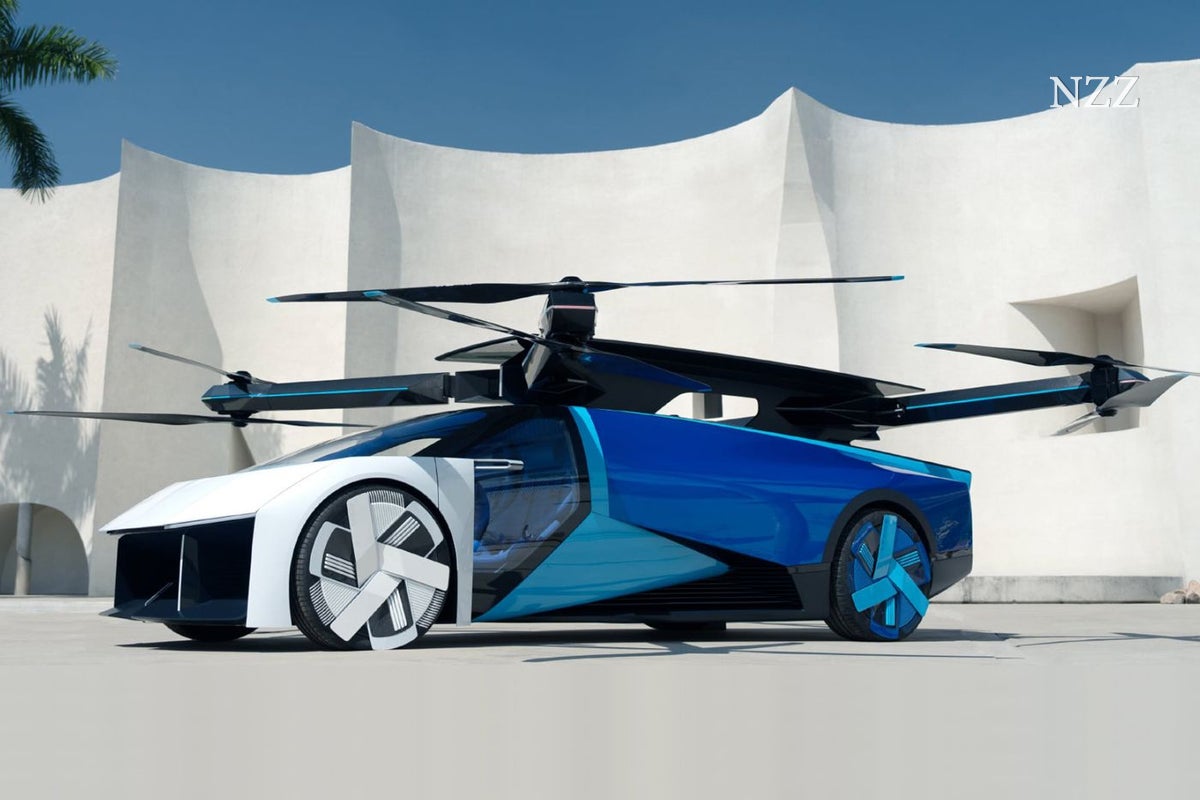
For decades, the concept of the flying car has been a quintessential symbol of the future, immortalized in science fiction from “The Jetsons” to “Blade Runner.” It represented a horizon of technological achievement that always seemed just out of reach. However, in a remarkable shift from fantasy to tangible engineering, that future is now being built and tested on airfields around the globe. We are no longer asking if flying cars will become a reality, but when and how they will integrate into our daily lives and urban landscapes. This comprehensive analysis moves beyond the hype to explore the concrete world of flying car prototypes currently undergoing rigorous testing, examining the technologies that power them, the regulatory hurdles they must clear, and the profound implications they hold for the future of mobility.
The term “flying car” itself is evolving. The industry now prefers more precise terminology like eVTOL (electric Vertical Takeoff and Landing), Urban Air Mobility (UAM), or Advanced Air Mobility (AAM) vehicles. These aren’t the car-plane hybrids of old comic books; they are a new class of aircraft designed for quiet, efficient, and relatively short-distance urban and regional travel. The current wave of innovation is being fueled by a convergence of advancements in battery technology, lightweight composite materials, artificial intelligence, and autonomous flight systems. This article will serve as your definitive guide to the pioneers, the prototypes, and the practicalities of this audacious new chapter in aviation.
A. The Technological Vanguard: Prototypes Transitioning from Blueprint to Flight Test
While dozens of companies are in the conceptual stage, a select group has progressed to building and flying full-scale, functional prototypes. Their testing regimes are critical, designed to prove safety, reliability, and performance under a wide array of conditions.
A.1. The eVTOL Front-Runners: Leaders in the Race to the Sky
A. Joby Aviation: The Endurance Champion
Perhaps the most prominent name in the eVTOL space, Joby Aviation has been conducting flight tests for over a decade. Their five-seat (one pilot, four passengers) aircraft is notable for its tilt-rotor design, which features six electric propellers that can pivot for vertical lift and forward thrust.
-
Current Testing Milestones: Joby’s prototype has achieved extraordinary milestones. In 2021, it completed a 154-mile test flight on a single charge, a critical benchmark proving its viability for urban commutes. It has also been tested for its remarkably low noise profile, a non-negotiable feature for urban integration. The company is deep into the certification process with the FAA, with plans to launch commercial passenger service as early as 2025.
-
Key Differentiator: Its extensive flight testing data and long-range capability position it as a leader not just for short hops, but for regional travel.
B. Archer Aviation: The Urban Commuter Specialist
Positioning itself as a direct competitor, Archer’s “Midnight” aircraft is designed specifically for back-to-back short-distance trips, akin to an air taxi service. It features a twelve-tilt-six configuration (twelve propellers total, with six that tilt).
-
Current Testing Milestones: Archer has moved from its “Maker” demonstrator to its production-intent “Midnight” aircraft. The focus of its current testing is on repetitive flight cycles, simulating a full day of air taxi operations with minimal charging time between flights. The Midnight is designed to carry four passengers for trips of approximately 20 miles, with a charging time of around 10 minutes.
-
Key Differentiator: Its business model and aircraft design are hyper-focused on high-frequency, rapid-turnaround operations in dense metropolitan areas.
C. EHang: The Autonomous Pioneer from China
While Western companies often plan for an initial pilot phase, China’s EHang has staked its claim on fully autonomous flight from the outset. Their EH216-S is a two-passenger, fully autonomous aerial vehicle that looks like a large drone.
-
Current Testing Milestones: EHang has conducted thousands of test flights, including demonstrations with passengers in cities across China, Japan, and Europe. It has received the first type certificate for a passenger-carrying, autonomous eVTOL aircraft from the Civil Aviation Administration of China (CAAC), a monumental step toward operational approval. Their testing focuses on the robustness of their command-and-control center, which can monitor and control entire fleets of aircraft simultaneously.
-
Key Differentiator: A bet on full autonomy, bypassing the need for licensed pilots and potentially lowering operational costs significantly.
D. Vertical Aerospace: The European Contender with Airline Backing
UK-based Vertical Aerospace has garnered significant attention and orders from major airlines like American Airlines and Virgin Atlantic. Their VX4 prototype is a piloted, four-passenger aircraft.
-
Current Testing Milestones: The VX4 has begun its flight test campaign, with goals of reaching speeds of 150 mph and a range of 100 miles. Their testing strategy is heavily aligned with the rigorous certification standards of the European Union Aviation Safety Agency (EASA), one of the world’s leading aviation regulators.
-
Key Differentiator: Strong partnerships with established aviation players, providing not just capital but also operational expertise and a potential pathway to market through existing airline networks.
E. Alef Aeronautics: The True “Flying Car”
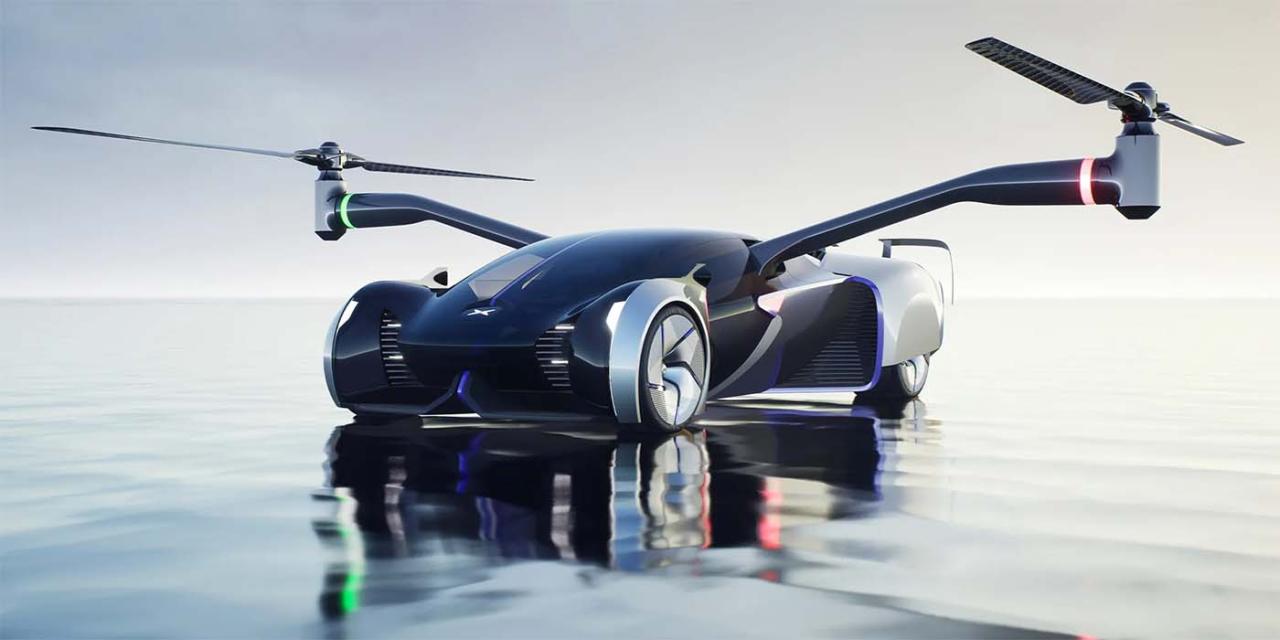
In a category of its own, Alef’s “Model A” stands out by aiming to be a true street-legal car that can also fly. It boasts a unique gimbaled rotating cabin and a mesh body that allows for vertical lift and forward flight.
-
Current Testing Milestones: While still in earlier stages than the leaders above, Alef has conducted test flights of a sub-scale prototype and is working on its full-scale, drive-and-fly vehicle. It has garnered significant pre-orders and is one of the few companies attempting to solve the complex physics of a vehicle that is genuinely capable on both road and sky.
-
Key Differentiator: Its daring design that seeks to fulfill the classic “flying car” dream, navigating both public roads and airspace.
B. The Engineering Crucible: Core Technologies Under the Microscope
The testing of these prototypes isn’t just about flying from point A to point B. It is a meticulous process of validating every core technology that makes eVTOL possible.
A. Propulsion Systems: The Electric Heartbeat
The shift to electric propulsion is the single most important enabler. Testing focuses on:
-
Motor Power Density and Redundancy: eVTOL aircraft require incredibly powerful yet lightweight electric motors. Prototypes are tested with multiple independent motors; if one fails, the others can compensate, providing a critical safety buffer.
-
Battery Performance and Safety: This is the greatest technological challenge. Tests go far beyond range, examining thermal runaway prevention, rapid charging cycles, cold-weather performance, and overall battery degradation over hundreds of flights. The goal is an energy pack that is as safe and reliable as a jet engine.
B. Flight Control Software and Avionics: The Digital Pilot
These aircraft are inherently unstable and cannot be flown by a human alone. They rely on complex fly-by-wire systems.
-
Stability and Failure Management: Test pilots push the aircraft to its limits to see how the software handles gusty winds, sudden shifts in weight, and simulated system failures. The software must be able to automatically stabilize the craft in any situation.
-
Sensor Fusion: Prototypes are equipped with a suite of sensors: LiDAR, radar, cameras, and GPS. Testing ensures this data is “fused” together in real-time to create a flawless understanding of the environment, avoiding obstacles and ensuring precise landing.
C. Noise Abatement: The Urban Permission Slip
Public acceptance hinges on noise. eVTOLs are significantly quieter than helicopters, but “quieter” is not enough. Testing uses sophisticated acoustic sensor arrays to measure noise footprint from all angles, ensuring the “whoosh” is no louder than urban background traffic.
D. Materials and Structures: The Quest for Lightweight Strength
Every kilogram saved in airframe weight translates directly into longer range or more payload. Prototypes utilize advanced carbon composites and alloys. They undergo brutal structural tests, including static load testing (bending wings to breaking point) and fatigue testing (simulating thousands of flight cycles) to ensure a multi-decade lifespan.
C. The Invisible Hurdles: Certification, Regulation, and Public Perception
Building a safe prototype is only the first step. The path to commercialization is paved with regulatory and societal challenges that are being addressed in parallel with technological development.
A. The Certification Gauntlet: Safety First, Always
Aviation is the safest form of transportation because of an uncompromising certification process. Agencies like the FAA (USA) and EASA (Europe) are writing the rulebook for eVTOLs, a process taking years.
-
Type Certification: This is the primary hurdle. It certifies that the design of the aircraft is airworthy. Companies like Joby and Archer are deep in this multi-year, billion-dollar process, providing countless hours of test data to prove their aircraft are as safe as commercial airliners.
B. Air Traffic Management (ATM) Integration: Orchestrating the Skies
Integrating hundreds or thousands of low-altitude eVTOLs into existing airspace is a monumental challenge. The solution lies in new UAM (Urban Air Mobility) Ecosystem concepts.
-
U-Space and Corridors: Europe is developing “U-Space,” a set of services and procedures based on high digitalization and automation to manage dense drone and eVTOL traffic. This will likely involve designated “sky corridors” or “highways in the sky” to ensure safe separation from other aircraft and each other.
-
Automated Tracking and Deconfliction: eVTOLs will constantly broadcast their location and flight intent. Advanced software will manage traffic flow, automatically suggesting course adjustments to prevent conflicts, much like a next-generation, automated air traffic control system.
C. Infrastructure Development: Building the Vertiports
A network of “vertiports” – the takeoff and landing pads for eVTOLs – must be built. Testing today is happening at temporary sites, but for commercial scale, vertiports need to be integrated into cityscapes.
-
Location and Zoning: Where do you put them? Rooftops of parking garages, helipads, waterfronts, and transportation hubs are prime candidates. Testing is underway to understand the logistical flow of passengers, charging, and maintenance at these sites.
-
Charging Infrastructure: High-power charging stations, potentially using automated robotic connectors, need to be developed and tested to enable the rapid turnaround times required for a profitable air taxi service.
D. The Economic and Social Equation:
-
Cost and Accessibility: Initially, eVTOL travel will be a premium service. The long-term goal is to make it affordable, potentially competing with ride-sharing and other ground transportation costs over time.
-
Public Acceptance and Noise: Beyond decibel levels, the psychological impact of seeing aircraft frequently overhead is unknown. Continuous community engagement and transparent testing data are crucial to gaining the “social license” to operate.
D. The Roadmap to Reality: A Phased Approach to Deployment
The introduction of flying cars will not happen overnight. It will be a carefully managed, phased rollout.
Phase 1: Cargo and Logistics (Happening Now)
Before carrying people, eVTOLs are being tested for cargo delivery. This allows companies to prove their technology and operational models in a lower-risk environment. Companies like Zipline have already completed hundreds of thousands of flights delivering medical supplies.
Phase 2: Regional and Inter-City Travel (2025-2028)
The first commercial passenger services will likely be piloted, point-to-point routes between major city centers and airports or between nearby cities. This leverages less complex airspace and serves a high-value use case for business travelers.
Phase 3: Intensive Urban Air Taxi Operations (2028-2035+)
As technology, regulation, and public acceptance mature, dense networks of air taxis within a single city will become feasible. This phase will likely see the introduction of higher levels of automation, with pilots potentially transitioning to a supervisory role.
Phase 4: Full Autonomy and Personal Ownership (Post-2035)
The final frontier is the fully autonomous eVTOL that you might own or subscribe to, summoned via an app. This phase is contingent on perfecting the technology and regulatory framework to a level of near-infallible safety.
Conclusion: A Transformation in Flight, Not Just a Novelty
The rigorous testing of flying car prototypes today is far more than a technical spectacle; it is the foundational work for a fundamental shift in how humanity moves. The companies at the forefront are not just building aircraft; they are architecting an entirely new ecosystem a three-dimensional layer of transportation that sits above our roads. The challenges are immense, from achieving regulatory certification to weaving these vehicles silently and safely into the fabric of our cities. However, the pace of progress is undeniable. The data streaming in from test flights around the world is steadily turning science fiction into engineering fact. The age of urban air mobility is dawning, and it promises to redefine distance, time, and connectivity for generations to come.