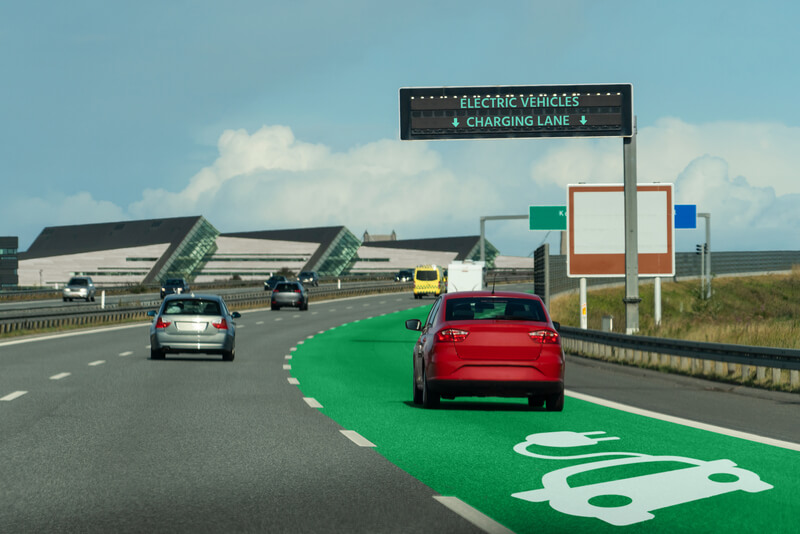
For over a century, the internal combustion engine has reigned supreme, its lifeblood gasoline and diesel delivered through a vast, global network of refueling stations. This ecosystem is familiar, efficient, and deeply ingrained in our culture. However, as the electric vehicle (EV) revolution accelerates, a fundamental question emerges: how do we power our journeys in a way that is equally, if not more, convenient and accessible? The answer may not lie in simply building more static charging pylons, but in fundamentally reimagining the road itself. We are standing on the precipice of a transportation paradigm shift, where the future highways will not just be strips of asphalt, but dynamic, intelligent systems capable of charging electric cars while they drive.
This concept, known as dynamic wireless power transfer (DWPT) or electric road systems (ERS), promises to address the most significant hurdles facing widespread EV adoption: range anxiety, charging time, and the immense pressure on our electrical grids. This is not merely an incremental improvement; it is a complete re-engineering of the mobility landscape that will have profound implications for consumers, industries, and the planet.
A. The Inevitable Electric Future and Its Lingering Hurdles
The transition to electric mobility is no longer a matter of “if” but “when.” Governments worldwide are setting ambitious targets to phase out fossil fuel vehicles, and automakers are responding with billions in investments toward electrifying their fleets. Yet, for all its benefits in emissions reduction and performance, the current EV model has its constraints.
A. Range Anxiety: Despite modern EVs offering 250-400 miles of range, the fear of being stranded with a depleted battery remains a powerful psychological barrier for many potential buyers. Long trips require meticulous planning around charging station locations and availability.
B. Charging Time: Even with the fastest DC fast chargers, replenishing an EV’s battery takes a minimum of 20-30 minutes for a significant charge, a stark contrast to the 5-minute fill-up at a gas station. This creates bottlenecks and congestion, especially during peak travel seasons.
C. Battery Size and Cost: To combat range anxiety, manufacturers are incentivized to install larger, heavier, and exceedingly expensive battery packs. This increases the vehicle’s upfront cost, weight (which reduces efficiency), and the environmental footprint of mining rare earth materials like lithium and cobalt.
D. Grid Infrastructure Strain: Imagine a future where millions of EVs plug into the grid every evening. The simultaneous demand for high-wattage charging could overwhelm local transformers and necessitate costly upgrades to the entire power generation and distribution network.
It is within this context that the concept of electrified highways emerges not as a novelty, but as a potential necessity.
B. How Can a Road Possibly Charge a Car? The Core Technologies Unveiled
The idea of a charging road sounds like science fiction, but it is grounded in well-established physics, primarily the principle of electromagnetic induction. Several competing technologies are currently being tested and refined, each with its own advantages and challenges.
A. Inductive Charging Systems: This is the most prominent and widely tested method. It operates similarly to wireless charging pads for smartphones.
* How it Works: Copper coils are embedded beneath the road surface. When an electric current flows through these coils, it generates an alternating magnetic field. A corresponding receiver coil, mounted on the underside of the EV, passes through this field, inducing an electrical current that charges the battery without any physical contact.
* Advantages: The system is entirely passive and hidden from view, reducing wear and tear from the elements and vehicles. There are no moving parts or exposed electrical components, enhancing safety.
* Challenges: Efficiency can be lower than conductive charging, as some energy is lost as heat in the transfer process. The alignment between the road coils and the vehicle receiver is crucial for optimal power transfer. The initial installation cost is very high, as it requires significant excavation and infrastructure work.
B. Conductive Charging Systems: This approach is more akin to a scale model of a slot car track or an electric tram system.
* How it Works: This system involves installing physical conductors, such as rails or overhead wires, along the roadway. Vehicles would be equipped with a movable connector, or a “pick-up” arm, that makes direct physical contact with these conductors to draw electricity.
* Advantages: It is highly efficient, with minimal energy loss during transfer, as it involves a direct electrical connection. The technology is already proven and deployed in electric trains, trolleybuses, and mining trucks.
* Challenges: Having exposed electrical components on the road surface presents challenges related to safety, weather-related corrosion (ice, snow, rain), and debris. The mechanical wear and tear on both the pick-up arm and the rail would require constant maintenance.
C. Capacitive Charging Systems: A less common but promising alternative.
* How it Works: This method uses pairs of metal plates one embedded in the road and one on the vehicle that form an electric field between them. Energy is transferred through this oscillating electric field.
* Advantages: It can potentially be more efficient than inductive systems and is less sensitive to misalignment between the road and vehicle components.
* Challenges: It requires a very small air gap between the plates, which is difficult to maintain on a dynamic, bumpy road surface. Safety protocols for managing the electric field also need to be robust.
Among these, inductive charging has gained the most traction for widespread highway application due to its safety and hidden nature, though conductive systems may find niches in dedicated lanes for commercial trucks.
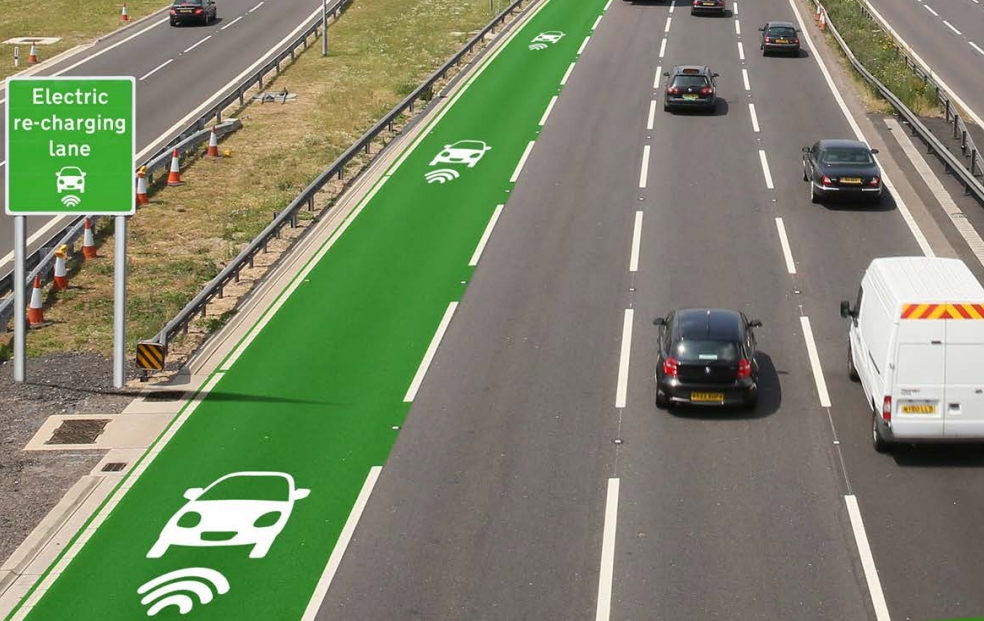
C. The Ripple Effect: Transformative Benefits of Electric Road Systems
The implementation of a national or even continental network of electric highways would trigger a cascade of positive effects, reshaping our relationship with transportation in ways we are only beginning to comprehend.
A. The Death of Range Anxiety: With dynamic charging, the effective range of an EV becomes virtually unlimited for highway travel. Drivers could embark on cross-country journeys without ever worrying about finding a charger, making EVs a seamless replacement for gasoline cars for 100% of use cases.
B. Smaller, Lighter, Cheaper Batteries: This is perhaps the most significant economic and environmental benefit. If a vehicle can be constantly topped up by the road, the need for a massive 100 kWh battery pack evaporates. Automakers could design EVs with smaller, 30-40 kWh batteries, sufficient for daily city driving and acting as a buffer for off-highway travel.
* Cost Reduction: Battery packs are the single most expensive component of an EV. Reducing their size by 60-70% could slash the upfront purchase price of electric cars, making them accessible to a much broader consumer base.
* Environmental Impact: Smaller batteries require far fewer raw materials, drastically reducing the environmental and ethical concerns associated with lithium and cobalt mining. It also simplifies the end-of-life battery recycling process.
* Efficiency Gains: A lighter car requires less energy to move, further increasing its overall efficiency and reducing the load on the power grid.
C. Optimized Energy Demand and Grid Management: Electric roads could transform the grid from a passive supplier to an active, managed network.
* Reduced Peak Loads: By shifting a significant portion of charging from stationary, evening-time peaks to a continuous, 24/7 process, the strain on the grid is balanced and mitigated.
* Integration with Renewables: Highways could be powered directly by solar canopies, nearby wind farms, or other renewable sources. This creates a direct, green energy pathway for transportation, decoupling it from fossil-fuel-powered plants.
D. A Boon for Autonomous and Commercial Vehicles: The synergy between electric roads and autonomous driving technology is profound. Self-driving trucks and taxis could operate nearly 24/7 without the downtime required for manual charging. For the freight industry, this means unprecedented efficiency in logistics and supply chains, lowering the cost of goods and reducing delivery times.
D. Navigating the Roadblocks: The Immense Challenges Ahead
While the vision is compelling, the path to electrifying our highways is fraught with technical, financial, and political obstacles that cannot be underestimated.
A. Colossal Infrastructure Investment: The cost of retrofitting thousands of miles of existing highways is astronomical. It involves not only embedding the charging technology but also upgrading the underlying electrical substations and distribution lines to support the massive power demand. Public-private partnerships will be essential, but the question of who bears the cost taxpayers, motorists, or energy companies remains unanswered.
B. The Standardization Dilemma: For electric roads to work, every vehicle from every manufacturer must be able to communicate and draw power from the same system. The world is still grappling with different plug standards for stationary charging (CCS, CHAdeMO, NACS). Achieving global consensus on a single dynamic charging technology is a Herculean task that will require unprecedented cooperation between automakers, governments, and tech providers.
C. Engineering and Maintenance Logistics: Highways are subjected to extreme stress, weather, and wear. How will the embedded technology withstand decades of heavy trucks, freezing temperatures, and thermal expansion? Repairing a faulty coil beneath the road would require lane closures and excavation, potentially causing significant traffic disruption. Developing durable, long-lasting systems and efficient maintenance protocols is a critical engineering challenge.
D. Energy Efficiency and Environmental Cost: No system is 100% efficient. Energy losses occur in transmission, conversion, and transfer. The overall lifecycle carbon footprint of manufacturing, installing, and operating thousands of miles of electric roads must be calculated and compared to the benefits of smaller EV batteries and reduced emissions. It must represent a net positive for the environment.
E. Equity and Access: Will access to electric highway lanes be a premium service? There is a risk of creating a two-tier system where only those who can afford vehicles equipped with the necessary technology or who can pay tolls for the charging lanes benefit. Ensuring equitable access for all citizens is a crucial social consideration.
E. From Blueprint to Asphalt: Global Pioneers and Real-World Trials
This is not merely a theoretical exercise. Several countries are leading the charge, moving from laboratory experiments to real-world pilot projects that are proving the technology’s viability.
A. Sweden’s SmartRoad Gotland: This project has successfully demonstrated an inductive charging system for both a commercial truck and an electric bus. The results have been promising, showing that the technology can operate safely and efficiently in a real-world environment, even in a Nordic climate.
B. Italy’s “Arena del Futuro”: This project near Brescia uses a sophisticated inductive charging system embedded in a circuit. A unique aspect is its use of direct current (DC), which improves overall efficiency by reducing energy conversion losses. Tests have shown remarkably high power transfer levels, sufficient for heavy-duty vehicles.
C. The United Kingdom’s Dynamic Charging Trials: The UK government has funded trials to test both inductive and conductive (overhead catenary) systems, the latter focused primarily on heavy goods vehicles. Their approach explores the feasibility of a mixed system, where different technologies are applied based on the vehicle type and road use.
D. The United States and Purdue University’s Breakthrough: American researchers are at the forefront of solving the core challenges. Engineers at Purdue University have developed a novel method that can deliver high-power levels at highway speeds using inductive charging, a significant step towards making the technology practical for American interstates.
These pilot programs are invaluable. They provide critical data on durability, user behavior, energy consumption, and total cost of ownership, informing the next generation of this transformative technology.
F. The Economic Ecosystem: Who Pays and Who Profits?
The business model for electric highways is as complex as the technology itself. It necessitates a new economic ecosystem involving multiple stakeholders.
A. The “Electricity as a Service” Model: Drivers would likely not own the electricity in the same way they own gasoline. Instead, they would pay for the energy consumed, likely through a subscription plan or a per-kilowatt-hour fee, billed automatically as they drive, using sophisticated metering and identification technology.
B. Public-Private Partnerships (PPPs): Given the scale of investment, a collaborative model is the most probable path forward. Governments would provide the right-of-way, regulatory framework, and potentially initial funding, while private technology firms would handle the installation, operation, and maintenance of the systems.
C. New Revenue Streams: For automakers, it opens a new market for selling vehicles equipped with receiver technology. For tech and infrastructure companies, it creates a long-term, utility-like revenue stream from energy sales and network access fees. For governments, it could generate new tax revenue while achieving climate goals and stimulating economic growth.
G. The Long Road Ahead: A Phased Implementation Scenario
A continent-wide rollout of electric highways will not happen overnight. It will be a gradual, multi-decade process, likely unfolding in distinct phases.
A. Phase 1: Dedicated Lanes (2025-2035): The first implementations will be on specific, high-traffic corridors, such as major interstates between cities or in dedicated bus and truck lanes. This allows for controlled testing, public acceptance, and business model validation.
B. Phase 2: Network Expansion (2035-2050): As technology costs decrease and standards solidify, the network will expand to connect major metropolitan areas and logistics hubs, creating a comprehensive national framework.
C. Phase 3: Ubiquitous Integration (2050 and Beyond): In this final stage, dynamic charging becomes a standard feature of most new highways and vehicles. The combination of a robust electric road network and a dense network of stationary fast chargers for off-highway travel creates a seamless, optimized, and fully decarbonized transportation system.
Conclusion: A Pivotal Junction for Transportation
The vision of highways that charge electric cars is a bold and transformative one. It represents a fundamental rethinking of infrastructure, turning passive roads into active participants in our energy and mobility ecosystem. While the challenges of cost, standardization, and implementation are monumental, the potential rewards the eradication of range anxiety, the democratization of EVs through lower costs, a dramatic reduction in the environmental impact of batteries, and the creation of a truly sustainable transportation model are too significant to ignore.
The journey from our current fossil-fuel-dependent system to this electrified future is the new frontier of engineering and public policy. As pilot projects continue to succeed and technology advances, the hum of an internal combustion engine may soon be replaced by the silent, efficient flow of energy from the road to the vehicle, powering not just our cars, but a cleaner, smarter, and more connected world.